Working from home or spending long hours in an isolated office removes the natural physical boundaries of a traditional workday. Without a commute to break up the morning or coworkers to prompt a lunch break, work and life easily bleed together. For many professionals, this lack of structure eventually leads to chronic physical fatigue and cognitive burnout.
Setting up the perfect ergonomic chair and aligning your monitors is only half of the equation. The physical hardware provides the foundation, but how you behave within that environment dictates your long-term health. Your daily habits determine whether your desk is a source of productivity or a slow drain on your vitality.
This pillar guide focuses on the lifestyle aspect of the modern desk worker. We will explore the critical components of a sustainable workflow, moving beyond furniture to address the routines, physical maintenance, and psychological boundaries required to build a long, healthy career.
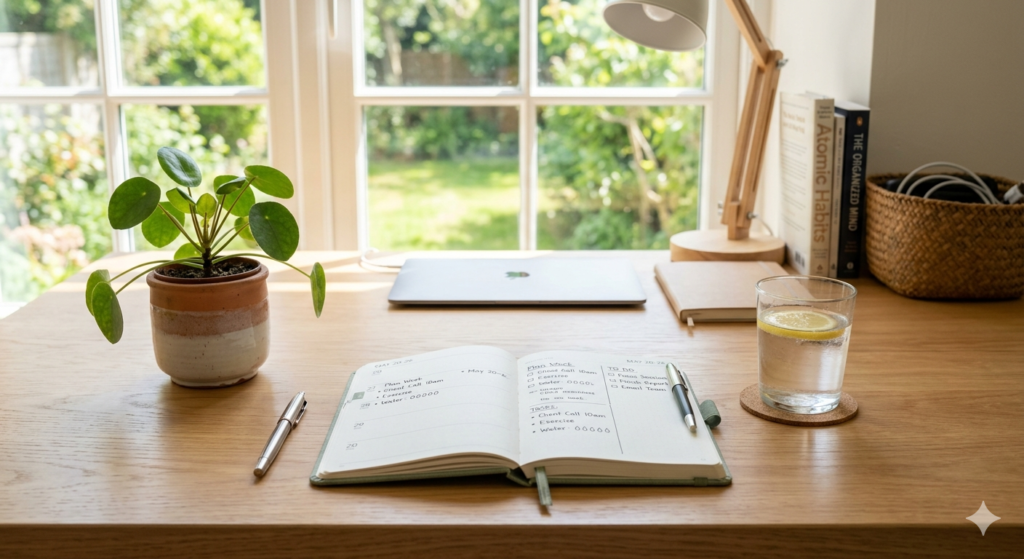
The Foundation of a Healthy Workday
What is workspace wellness? Workspace wellness is the intentional practice of integrating healthy physical and cognitive habits into your daily work environment. It encompasses maintaining proper hydration, taking structured movement breaks, and establishing psychological boundaries to preserve mental clarity and long-term physical longevity.
Treating your work environment as a holistic ecosystem prevents the slow accumulation of stress. When you prioritize wellness alongside your task list, you effectively increase your stamina and protect your body from the repetitive strains of modern desk work.
Structuring a Sustainable Daily Routine
The human brain relies on environmental cues to switch between resting and working states. When you work from the same building where you sleep, those cues vanish. To compensate, you must artificially create a daily routine that bookends your day.
- The Morning Transition: Do not roll out of bed and immediately open your laptop. Establish a 30-minute buffer. Engage in a brief walk, read a book, or stretch. This physical transition mimics a commute, signaling to your nervous system that the workday is beginning.
- The Shutdown Ritual: At the end of the day, close your tabs, physically push your chair in, and turn off the desk lamp. This concrete action provides psychological closure, preventing work anxiety from bleeding into your evening.

The Biological Importance of Hydration
One of the most overlooked aspects of desk health is fluid intake. The brain is composed of roughly 73% water. Clinical studies demonstrate that even mild dehydration—as little as 2% fluid loss—can significantly impair cognitive function, memory, and attention span.
When engaged in deep, focused work, it is remarkably easy to ignore your body’s thirst signals. To preserve your mental clarity throughout the afternoon slump, you must automate your water intake.
Keep a dedicated vessel on your desk at all times. Utilizing a tool that tracks your consumption or physically reminds you to take a sip can seamlessly integrate this habit into your workflow.
Consistent hydration lubricates your joints, helps flush out metabolic waste, and maintains the blood volume necessary to deliver oxygen to your brain.
Integrating Practical Health Hacks
Achieving longevity does not require extreme biohacking; it requires the consistent application of small, manageable habits. Incorporating simple health hacks into your day prevents the physical stagnation that leads to injury.
- Micro-Breaks: You cannot focus intensely for eight hours straight. Implement a system like the Pomodoro technique (25 minutes of work, 5 minutes of rest) to give your visual and cognitive systems mandatory downtime.
- Habit Stacking: Tie physical movement to existing actions. For example, stand up every time you take a phone call, or perform a quick chest stretch every time you hit “send” on an important email.
- Visual Rest: As we explored in our visual environment guides, staring at a fixed distance exhausts the ocular muscles. Regularly look away from your screen to focus on distant objects, keeping your ciliary muscles relaxed.
Protecting Mental Clarity Through Environment
Your physical environment directly impacts your psychological state. Visual clutter translates into cognitive clutter. When your peripheral vision is filled with scattered papers, tangled wires, and dirty coffee mugs, your brain expends subconscious energy trying to process that disorganized stimuli.
Dedicate the last five minutes of your workday to clearing your desk surface. Resetting your workspace ensures that when you arrive the next morning, you are greeted by a blank canvas. This simple habit drastically reduces morning friction and allows you to direct 100% of your energy toward your actual work.
Conclusion
Building a career at a desk is an endurance event, not a sprint. True workspace wellness is achieved by taking control of the lifestyle factors that surround your digital tasks. By establishing a firm daily routine, prioritizing your hydration, applying simple movement habits, and keeping your environment organized, you create a foundation for long-term health. Cultivating these habits today ensures that your body and mind remain sharp, focused, and pain-free for decades to come.
Frequently Asked Questions (FAQ)
Why is workspace wellness important?
Workspace wellness is crucial because prolonged desk work naturally leads to sedentary behavior, postural degradation, and mental burnout. Actively managing your wellness prevents chronic injuries, boosts daily energy, and sustains long-term career productivity.
How much water should I drink at my desk?
While individual needs vary based on body size and climate, a standard baseline is to consume at least half an ounce to one ounce of water per pound of body weight per day. Keeping a full bottle at your desk encourages consistent sipping rather than infrequent gulping.
What is a shutdown ritual?
A shutdown ritual is a specific sequence of actions you perform at the end of every workday to signal to your brain that work is over. This might include writing tomorrow’s to-do list, closing all browser tabs, and physically turning off your computer monitor.
How does clutter affect mental clarity?
Visual clutter acts as a distracting stimulus. The brain naturally attempts to scan and categorize objects in its field of view. A messy desk forces the brain to expend unnecessary energy filtering out the mess, which reduces the cognitive bandwidth available for complex work tasks.