Sitting down to work should not feel like applying a slow tourniquet to your lower body. Yet, millions of professionals experience heavy, throbbing, or swollen legs by the time they clock out. If you constantly feel the need to stretch your legs, shake out your feet, or shift your weight to restore feeling, your office chair is likely actively working against your cardiovascular system.
While most ergonomic discussions focus on the back and neck, the lower extremities bear a significant, hidden burden during seated work. Your chair acts as a physical interface with your body, and when that interface is improperly sized, it restricts vital biological functions.
This troubleshooting guide explains the physical mechanics behind leg pain at desk. We will explore how poor chair adjustments strangle circulation, the medical realities of prolonged sitting, and actionable steps to restore proper blood flow to your lower half.
The Mechanics of Seated Leg Pain
Leg pain at desk is typically caused by sustained mechanical pressure from the front edge of a chair restricting blood flow in the thighs. This continuous thigh compression leads to poor circulation, blood pooling in the lower extremities, and uncomfortable fluid retention known as edema.
When you sit, your heart has to pump blood all the way down to your toes and then fight gravity to pull it back up. Your body relies on the movement of your leg muscles to act as a “second heart,” squeezing the veins to push the blood upward. Sitting perfectly still disables this muscular pump, leaving your vascular system to do all the heavy lifting.
Understanding Chair Edge Pressure and Seat Pan Depth
The most common physical culprit for this discomfort is a mismatch between your leg length and the chair’s seat pan depth. The seat pan is the flat cushion you sit on.
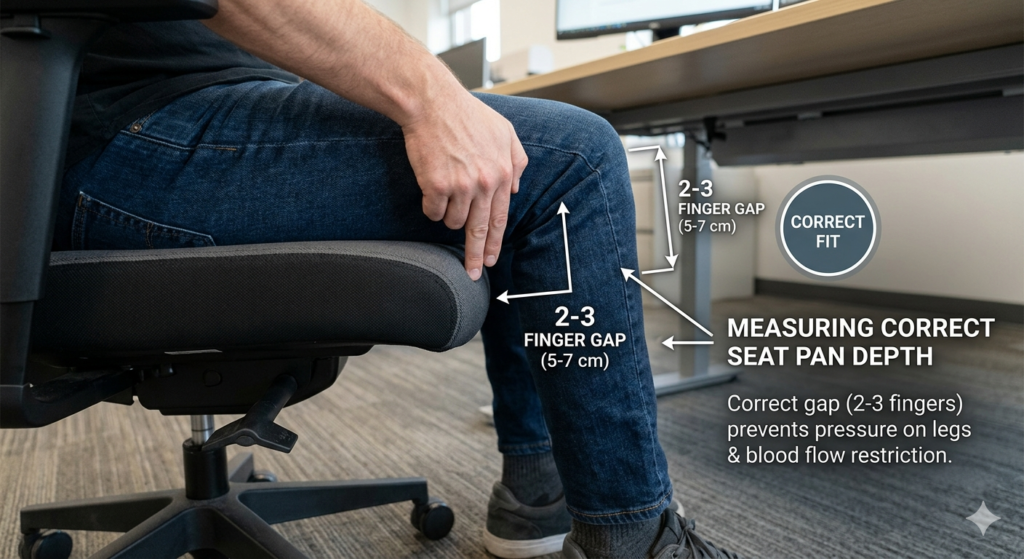
If the seat pan is too long for your body, the hard front edge of the chair will dig directly into the popliteal fold (the soft area behind your knees). This area houses major blood vessels and nerves that run down into your calves.
When you lean back or relax your legs, the rigid edge of the chair acts like a clamp. This direct, localized pressure pinches the veins, severely restricting the return of blood to the heart. To fix this, you must adjust the seat pan depth so there is a clear two-to-three finger gap between the back of your knees and the edge of the cushion.
The Dangers of Restricted Blood Flow
Ignoring heavy, aching legs is a dangerous habit. Just as static upper-body postures lead to cumulative tissue damage, as detailed in our pillar guide on Repetitive Strain Injury (RSI): Symptoms, Prevention & Recovery, static lower-body postures cause systemic vascular stress.
Edema (Swelling)
Continuous thigh compression forces fluid to leak out of the congested veins and into the surrounding tissues of the calves and ankles. This condition, known as dependent edema, causes your shoes to feel tight by the end of the day and leaves your legs feeling exhausted and heavy.
Deep Vein Thrombosis Risk
Prolonged immobility paired with restricted blood flow creates an ideal environment for blood to pool and clot. This elevates your deep vein thrombosis risk (DVT). A DVT is a blood clot that forms in a deep vein, usually in the leg. If a piece of this clot breaks off and travels to the lungs, it becomes a life-threatening pulmonary embolism. While rare, DVT is a documented medical reality for individuals who sit for excessive, uninterrupted periods.
Troubleshooting and Immediate Solutions
If your chair is cutting off your circulation, you must immediately alter the physical geometry of your workstation.
- Lower the Chair: Ensure your feet are completely flat on the floor. If your chair is too high, the entire weight of your legs will hang from your thighs, maximizing the pressure against the seat edge.
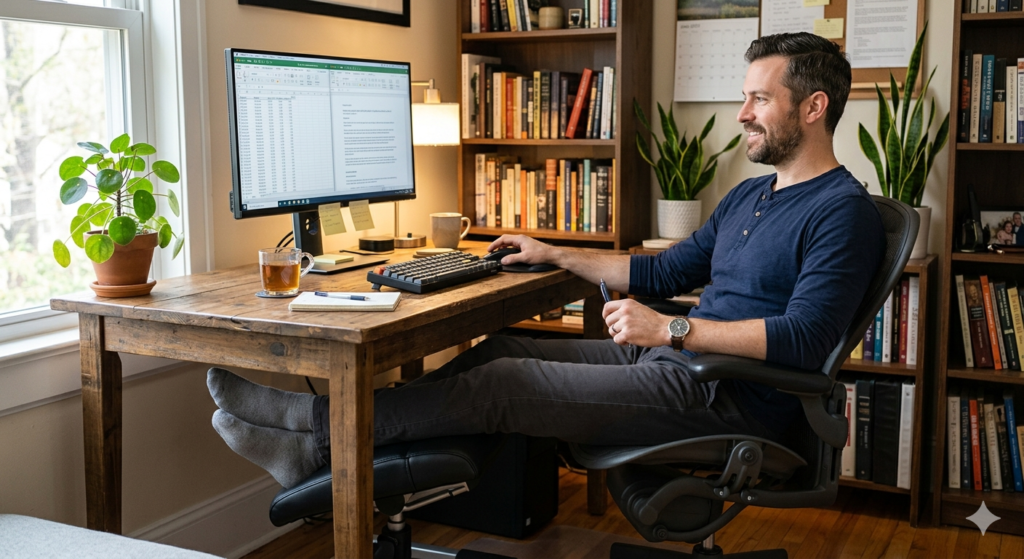
- Elevate and Shift: If your chair cannot be lowered (or if your desk is too high), you must bring the floor up to you. Suspending your feet slightly off the ground can shift your weight backward onto your glutes, relieving the back of the thighs. Utilizing an adjustable under-desk foot hammock can also encourage micro-movements, allowing you to easily sway or flex your ankles to keep the calf muscles active.
- Mandatory Movement: You cannot out-ergonomic prolonged stillness. Set a timer to stand up, walk, or perform calf raises every 45 minutes to manually pump the pooled blood out of your lower legs.
Conclusion
Experiencing leg pain at desk is a clear signal that your cardiovascular system is struggling against mechanical compression. By adjusting your seat pan depth to eliminate chair edge pressure, you can immediately improve blood flow and reduce the uncomfortable swelling of edema. Respecting the reality of deep vein thrombosis risk means treating your lower body ergonomics just as seriously as your spinal alignment. Keep your feet supported, keep your legs moving, and ensure your chair fits your unique physical dimensions.
Frequently Asked Questions (FAQ)
Why do my legs throb when I sit at my computer?
Throbbing legs are usually a sign of blood pooling due to poor circulation. When a chair’s edge compresses the back of your thighs, blood struggles to return to the heart, leading to increased pressure in the veins of the lower legs.
How do I stop my chair from cutting off circulation?
To stop the chair from cutting off circulation, adjust the seat pan depth so there is a two-inch gap behind your knees. Also, ensure your feet are flat on the floor or on a footrest so your thighs are parallel to the ground, rather than angling downward.
Is it normal for my ankles to swell after a day of desk work?
Mild swelling (dependent edema) is common among desk workers, but it is not a healthy “normal.” It indicates that fluid is leaking into the tissues due to restricted venous return. You should take regular walking breaks to manually pump the fluid out of your lower legs.
Can sitting too long cause a blood clot in my leg?
Yes. Sitting immobile for long periods without breaks significantly increases the risk of Deep Vein Thrombosis (DVT), a condition where a blood clot forms in a deep vein due to sluggish blood flow. Taking frequent, short walking breaks drastically reduces this risk.