For most desk workers, a mild lower back ache is an annoying but manageable part of the day. Sciatica, however, is a completely different beast. When the sciatic nerve is aggravated, sitting down in an office chair can feel like sitting on a live wire. The sharp, shooting pain that travels from the lower back down through the hip and leg makes focusing on a computer screen practically impossible.
Unlike a standard muscle strain that might respond well to a quick stretch, nerve pain is highly reactive to physical compression. When your primary job requirement is to remain seated for eight hours a day, you are actively placing your body weight directly onto the exact structures that are causing your agony.
This guide is designed for professionals dealing with severe nerve irritation. We will explore the mechanical triggers of this condition and outline specific, actionable strategies for achieving sciatica relief at work without having to abandon your desk entirely.
Understanding Sciatica and Seated Compression
What is sciatica relief at work? Sciatica relief at work involves modifying your seated environment and posture to mechanically decompress the sciatic nerve. It requires minimizing direct physical pressure on the lower spine and glutes to prevent the sharp, radiating pain associated with prolonged sitting.
To manage the pain, you first have to understand where the impingement is occurring. The sciatic nerve is the longest and thickest nerve in the human body. It originates from several nerve roots in the lower lumbar spine, merges deep in the buttocks, and runs all the way down the back of each leg.
Because of this long pathway, the nerve can be pinched or irritated in a few different locations, both of which are severely exacerbated by sitting.
The Two Main Culprits of Desk-Induced Sciatica
While medical diagnoses vary, desk workers typically experience sciatic nerve pain due to one of two mechanical issues.
1. Lumbar Disc Compression
As we explored in our broader structural guides, sitting drastically increases the pressure on the intervertebral discs in your lower back. If your seated posture involves slouching or leaning forward, this pressure can cause a spinal disc to bulge backward. The bulging disc then presses directly against the sciatic nerve roots exiting the spine, sending electrical, radiating pain down your leg.
2. Piriformis Syndrome
Sometimes the spine is perfectly healthy, but the nerve is pinched further down in the buttocks. The piriformis is a small muscle located deep in the glutes, sitting directly over (and sometimes passing right through) the sciatic nerve.
When you sit on a hard chair for hours, you compress this muscle. If the muscle spasms, tightens, or becomes inflamed from this constant pressure, it acts like a vice grip on the sciatic nerve. This condition, known as piriformis syndrome, is a primary reason why a standard office chair can trigger intense leg pain within minutes of sitting down.
Workspace Adjustments for Immediate Relief
If sitting is the trigger, altering the surface you sit on is the most immediate way to find relief. Standard office chair cushions are designed for general comfort, not for nerve decompression.
To offload the pressure from the base of the spine and the deep gluteal muscles, you must change how your body weight is distributed. Utilizing a specialized seat pad designed with a specific U-shaped cutout at the back allows your tailbone to “float” freely rather than bearing weight. This subtle suspension stops the chair from pushing up against your lumbar spine and takes direct physical pressure off the piriformis muscle.
Furthermore, you must strictly respect your sitting limitation. Nerve inflammation does not tolerate endurance tests. If your body signals pain after 20 minutes of sitting, your sitting limitation is 19 minutes. You must stand up and walk before the threshold of pain is reached to prevent a severe flare-up.
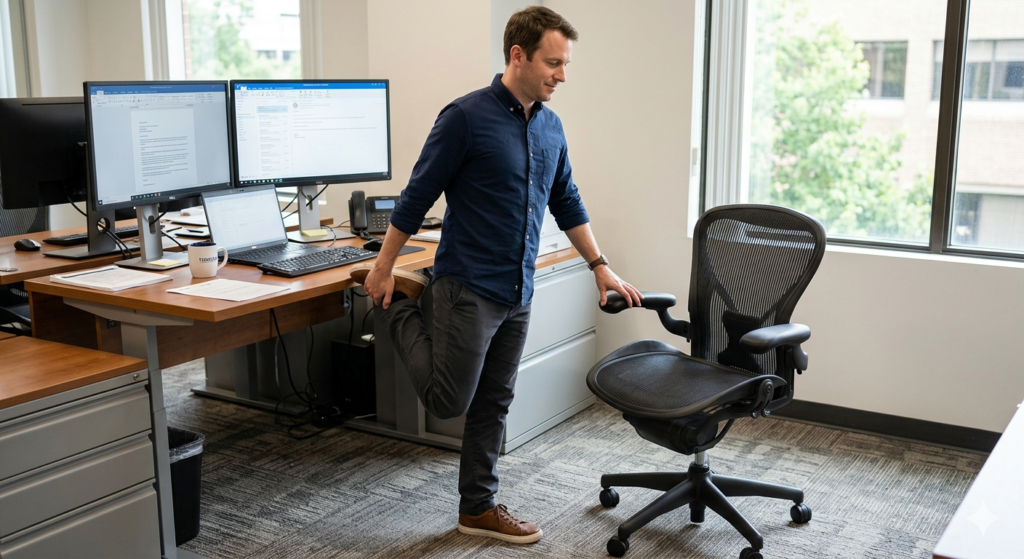
Active Management: Nerve Flossing
When dealing with traditional muscle inflammation, as detailed in our pillar guide on Repetitive Strain Injury (RSI): Symptoms, Prevention & Recovery, rest and static stretching are common protocols. Nerves, however, do not like to be stretched. Stretching an angry, inflamed nerve will usually make the pain significantly worse.
Instead of stretching, physical therapists often recommend a technique called nerve flossing (or nerve gliding).
Nerves are meant to glide smoothly through tunnels of muscle and tissue. When surrounding tissues become tight, the nerve gets “stuck.” Nerve flossing involves gentle, dynamic movements that pull the nerve from one end while releasing it from the other, effectively sliding it back and forth through its sheath to break up adhesions without applying tension.
Note: Always consult a physical therapist before attempting nerve flossing to ensure you are performing the precise movements appropriate for your specific impingement.
Conclusion
Finding sciatica relief at work requires a shift in how you interact with your desk. Nerve pain is a strict mechanical boundary; pushing through the pain will only cause further inflammation and prolong your suffering. By understanding whether your pain stems from lumbar compression or piriformis syndrome, modifying your seating to suspend the tailbone, and strictly adhering to your sitting limitations, you can actively manage the condition and maintain your productivity without agonizing discomfort.
Frequently Asked Questions (FAQ)
Is it better to sit high or low with sciatica?
When dealing with sciatica, it is generally better to sit slightly higher so your hips are elevated above your knees (an open hip angle of 100 to 110 degrees). Sitting too low forces the pelvis to roll backward, which increases lumbar disc pressure and stretches the sciatic nerve.
Does crossing my legs make sciatica worse?
Yes. Crossing your legs aggressively stretches the piriformis muscle and places asymmetrical pressure on the pelvis. This can immediately pinch the sciatic nerve and trigger radiating pain down the crossed leg.
Can a standing desk cure sciatica?
A standing desk will not “cure” the underlying cause of sciatica, but it is an excellent tool for managing it. Standing relieves the direct pressure on the glutes and reduces lumbar disc compression, allowing you to work longer without triggering a pain response.
Why does my sciatica hurt more when I sit on a soft couch?
Soft couches lack structural support. They cause your pelvis to sink and roll backward into a deep C-shaped curve, which maximizes the mechanical pressure on your lower spinal discs and compresses the nerve roots. Firm, ergonomic support is always better for nerve pain.