The modern office environment practically forces a sedentary lifestyle. Sitting motionless for eight to ten hours a day takes a profound toll on the human body, contributing to everything from chronic lower back pain to metabolic sluggishness. If you feel lethargic by mid-afternoon, your body is likely reacting to this prolonged lack of movement.
Fortunately, altering your working position can mitigate these negative effects. However, simply buying new furniture and standing up for eight hours straight is a recipe for severe foot and joint pain. To truly harness standing desk benefits, you must understand both the physiological science of standing and the proper method for transitioning your body to this new physical load.
This pillar guide explores the objective “Why” and “How” of the sit-stand workflow. We will strip away the common myths and focus on the scientifically supported health improvements, providing a practical blueprint for incorporating movement into your daily routine.
The Science Behind the Stand
What are standing desk benefits? Standing desk benefits are the physiological and cognitive improvements gained by alternating between sitting and standing throughout the workday. These benefits include increased metabolic rate, stabilized blood sugar, reduced spinal compression, and enhanced overall cardiovascular health.
Human bodies are biomechanically designed for regular movement, not static loading. When you alternate your posture, you force different muscle groups to engage and disengage. This continuous cycle of muscle activation is the core engine behind all true sit-stand benefits.
Key Sit-Stand Benefits for Physical Health
The physiological advantages of standing extend far beyond simply burning a few extra calories. The real value lies in how standing alters your body’s internal chemistry and mechanical stress.
Modulating Blood Sugar and Metabolic Rate
When you sit down, the large muscles in your legs and core essentially go dormant. This sudden drop in muscular activity slows your overall metabolic rate.
Conversely, standing requires continuous, micro-adjustments from your stabilizing muscles to keep you balanced. This low-level muscular engagement requires energy. Studies have shown that standing up after a meal allows these active muscles to absorb circulating glucose much faster, significantly blunting post-meal blood sugar spikes that typically cause afternoon fatigue.
Reducing Lumbar Disc Compression
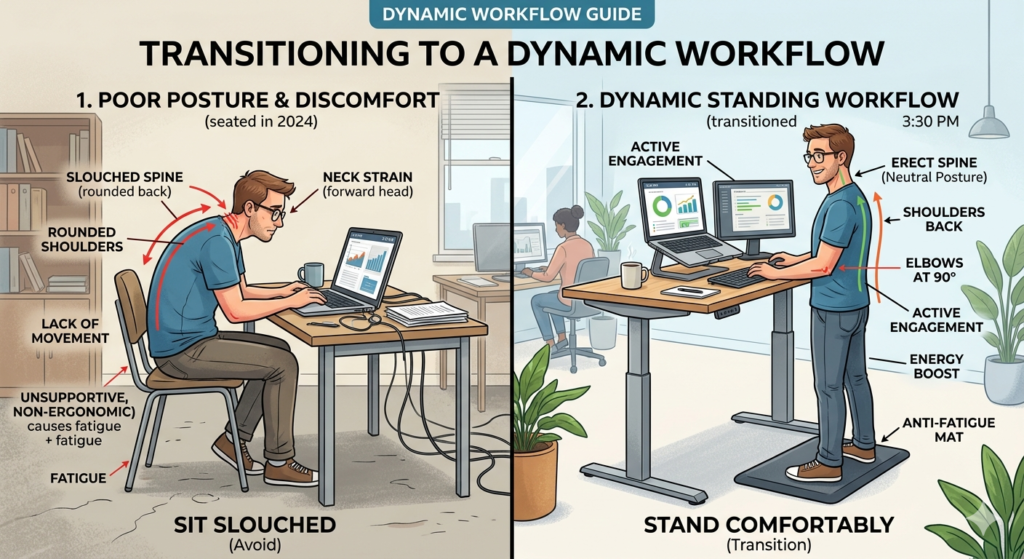
As we detailed in our pain management guides, sitting actively compresses the intervertebral discs in your lower spine. Standing restores the natural, elongated S-curve of the spine, allowing the spinal discs to rehydrate and taking the pressure off pinched nerves.
Cognitive Impact and Productivity
The physical benefits of standing directly translate into cognitive advantages. The brain relies on a steady flow of oxygenated blood to maintain focus and execute complex tasks.
When you sit motionless for hours, blood pools in the lower extremities, and circulation slows. By transitioning to a standing position, you immediately increase your heart rate by roughly 10 beats per minute. This pumps fresh blood and oxygen up to the brain, combating brain fog and directly boosting productivity. Many workers report that standing is highly effective for tasks that require high energy, such as leading a video conference or brainstorming.
How to Transition Safely
The most common mistake new users make is attempting to stand for their entire shift on day one. Your feet, knees, and lower back are not conditioned for this sudden, continuous load, which will quickly lead to severe fatigue.
- Start Small: Begin by standing for just 15 to 20 minutes for every hour of sitting.
- Listen to Your Body: If your heels begin to ache or you find yourself locking your knees, it is time to sit back down.
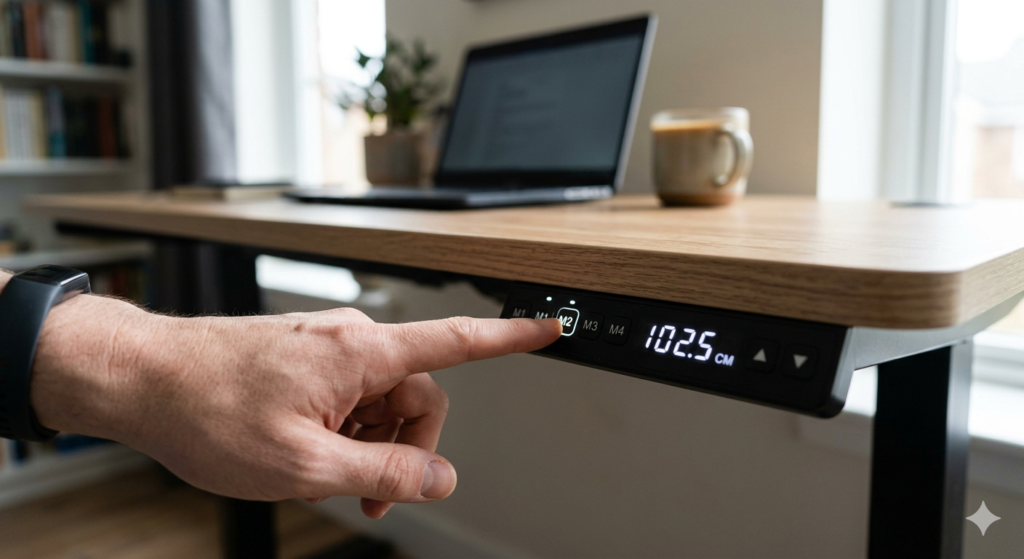
- Make Adjustments Frictionless: The key to a successful transition is making the movement effortless. If it takes too much physical effort to adjust your workstation, you will simply stop doing it. Utilizing an electric standing desk allows you to change postures with the push of a button, ensuring you actually maintain the sit-stand rhythm throughout the day.
Conclusion
Maximizing standing desk benefits requires viewing your workspace as a dynamic environment rather than a static fixture. By systematically alternating your posture, you can keep your metabolic rate active, prevent hazardous blood sugar spikes, and maintain high productivity levels throughout the afternoon. Remember that the goal is not to stand all day, but rather to introduce consistent, healthy movement back into your daily routine. Transition slowly, listen to your joints, and allow your body the time it needs to adapt to a healthier way of working.
Frequently Asked Questions (FAQ)
Do standing desks help you lose weight?
While standing burns slightly more calories than sitting (roughly 20-50 extra calories per hour), it is not a substitute for exercise. The primary benefits are metabolic regulation and musculoskeletal relief, rather than significant weight loss.
Is it better to stand all day instead of sitting?
No. Standing perfectly still all day introduces its own set of health risks, including varicose veins, knee pain, and plantar fasciitis. The healthiest approach is alternating between sitting and standing to promote continuous circulation.
How often should I switch between sitting and standing?
A highly effective starting point is the 20-8-2 rule: sit for 20 minutes, stand for 8 minutes, and move around for 2 minutes. This keeps the body in a constant state of light physical transition.
Will a standing desk cure my lower back pain?
If your back pain is caused by the lumbar disc compression associated with prolonged sitting, standing can offer significant relief. However, if your pain stems from underlying structural issues, standing may not cure it entirely, and you should consult a physical therapist.